
Knee discomfort during squats isn’t a rarity – it’s a shared experience among novice gym-goers and seasoned weightlifters alike. But there’s good news: you can do something about it! This article presents invaluable advice on tackling knee pain during squats, and we’re here to pass that wisdom on to you.
Kick-start with a Warm-up
Every effective workout begins with a warm-up. A blend of dynamic stretches and light resistance exercises, particularly focusing on the knee-encompassing muscles, is key to preparing your body for the squat challenge that lies ahead.
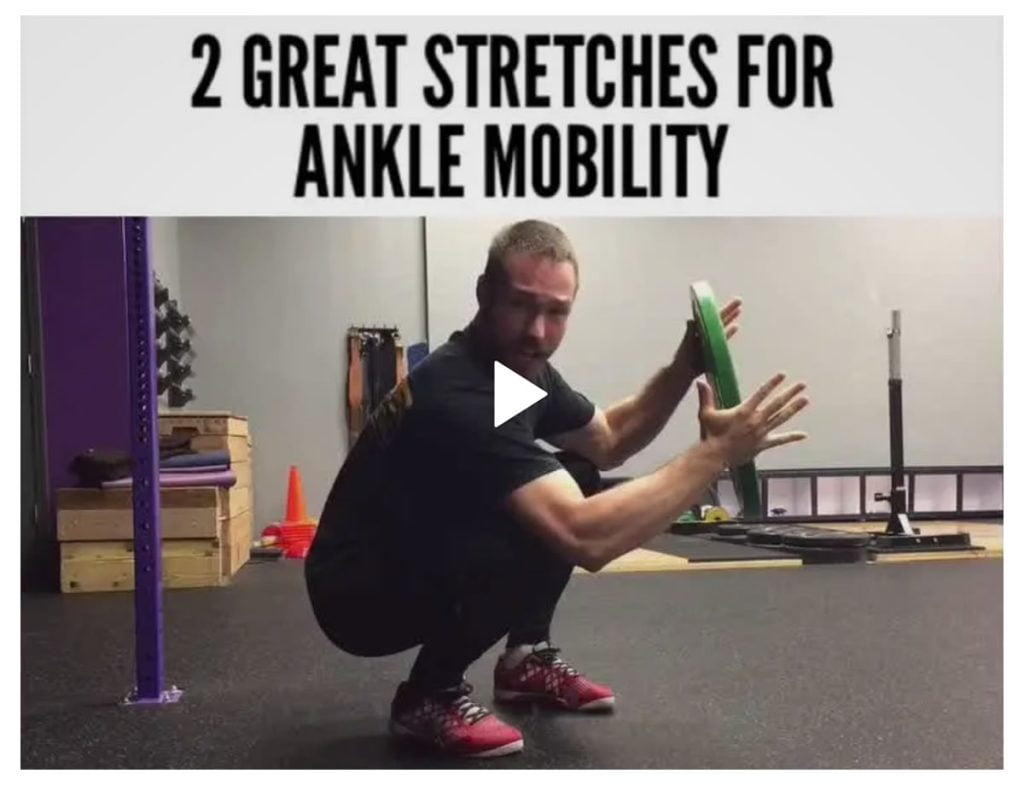
A deep goblet squat ankle stretch is good to improve ankle mobility prior training. Sit into a deep squat (using a plate to offset your body weight) and drive your knee over your toes until you feel a good stretch in the back of your calf muscle. Hold 3-4 stretches on each side for 10-30 seconds.
Technique is Everything
The culprit behind knee pain is often an incorrect squat form. It’s paramount to ensure that your knees align with your feet and don’t buckle inward. Dr. Horschig of Squat University explains,
When we look at the knee joint, we find that it’s basically a hinge that is stuck between the ankle and hip. During most weight room movements, we want to maintain alignment of the knee between the foot and the hip.
He champions the mastery of squat technique, insisting that it’s a fundamental shield against injuries.
Our team of coaches can work on your squat technique to reduce and then eliminate knee pain. We always recommend you book in for a biomechanical consultation first and then work with a trainer to embed the technique changes.
Empower Your Hip Muscles
Weak hip muscles can be a contributing factor to knee pain. Including exercises that fortify the hips can significantly mitigate knee discomfort. There are a plethora of hip strengthening exercises tailored to enhance squat performance and diminish knee pain.
Tackle Mobility Issues
Knee pain can occasionally stem from mobility challenges in the ankles or hips. Dr. Horschig often highlights how ankle mobility can influence squat depth and knee health. Incorporating stretches and mobility exercises for ankles and hips can help alleviate the pressure exerted on knees during squats.
To improve knee stability and hence reduce knee pain, an exercise called reactive neuromuscular training (RNT) is suggested. This involves performing a single leg squat with a resistance band around the knee, pulled slightly inward by a partner. The athlete then performs the squat while resisting the inward pull of the band, which helps to improve the body’s awareness of the knee during the squatting motion and trains it to naturally turn on the appropriate glute muscles to prevent knee collapse. The recommended sets and reps for this exercise are 2-3 sets of 15-20 repetitions.
Select the Right Footwear
The shoes you wear while squatting can impact the stress imposed on your knees. Weightlifting shoes with elevated heels can be particularly beneficial for those grappling with ankle mobility issues, as they lessen the need for ankle dorsiflexion.
Heed Your Body’s Signals
Discerning between ‘good’ pain (muscle soreness) and ‘bad’ pain (joint pain) is essential. If you encounter sharp pain or discomfort that intensifies with exercise, it’s time to reevaluate your form or seek advice from your coach or book in for a biomechanical consultation.
Don’t let knee pain during squats slip under your radar. By homing in on warm-ups, technique, muscle strengthening, mobility, and the right footwear, you’re laying the groundwork for a pain-free squatting experience. Remember, always listen to your body and seek professional advice if knee pain persists.

